
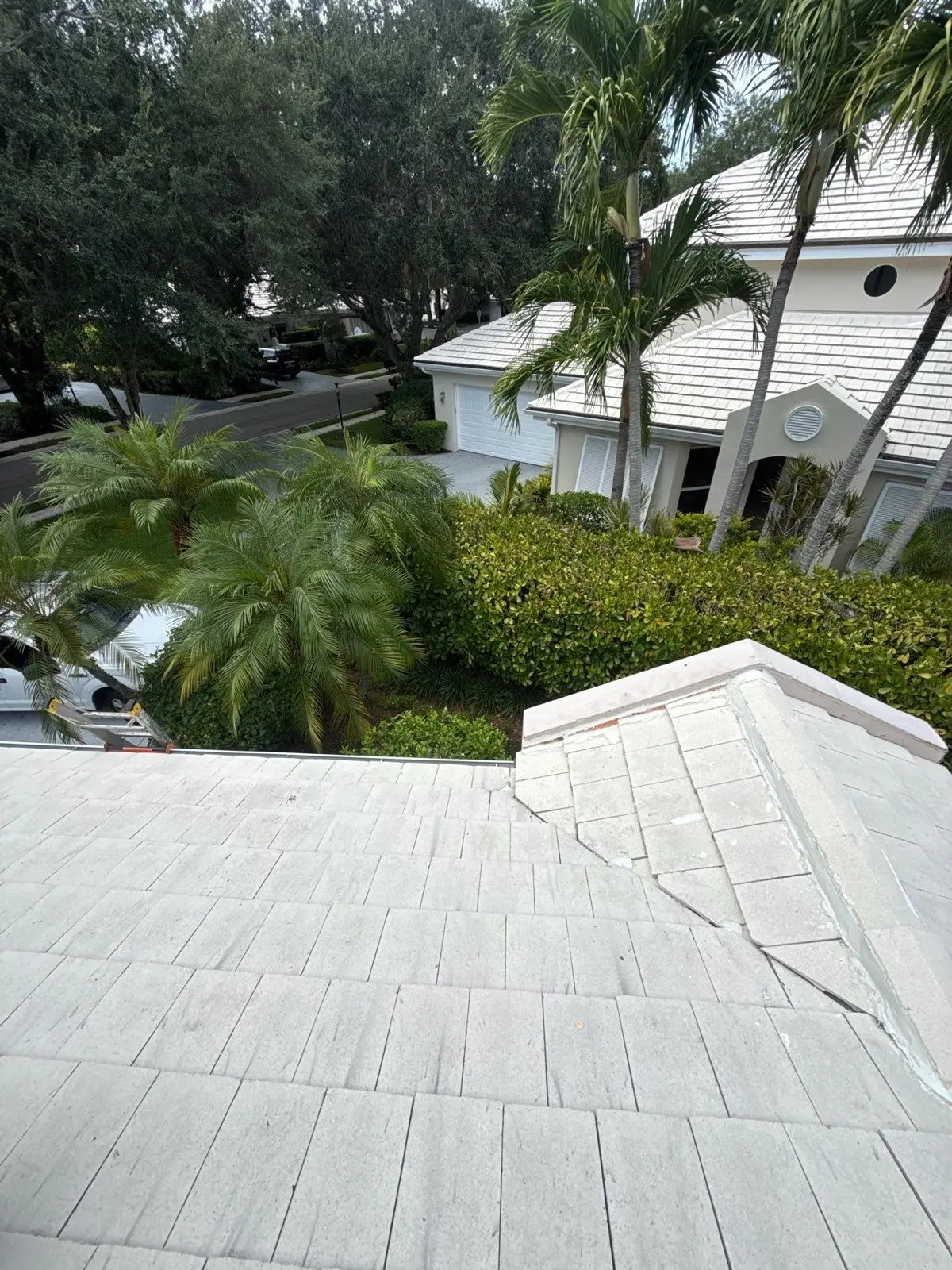
One of the most common things I hear from homeowners is, “The tiles look fine. Can you go up and see where the leak is?”
The problem is that, on most concrete- and clay-tile roofs in South Florida, the tiles are not the primary waterproofing system. The underlayment beneath them is what keeps water out of the house. The tiles protect that underlayment from direct sunlight, weather, and physical damage.
That means a tile roof can look perfectly normal from above and still be leaking underneath.
What the tile actually does
Tile is an important part of the roof, but it is helpful to understand its job. The tile shields the waterproofing beneath it, especially from ultraviolet exposure. Roofing underlayment is designed to resist water, but it is not meant to sit uncovered in the South Florida sun. Prolonged UV exposure can make it crack, peel, and deteriorate.
The underlayment does the primary water-shedding work. As it ages, small weaknesses can develop around nails, flashing, transitions, and other complicated parts of the roof—even when the tile above still looks intact.
Why valleys, returns, and roof complications are common leak areas
Water does not always stay on top of the tile. In a valley, for example, water can travel beneath the tiles as it moves down the roof. Valley metal flashing normally extends up both sides to help control that water.
The areas where that valley changes direction or continues around another section of roof are often called returns. These and similar roof complications handle concentrated water and can be more vulnerable as the roof ages.
Water repeatedly heats and cools the materials beneath the tile. Wood, metal, and fasteners expand and contract at different rates. Over time, age and movement can help create openings around nails, laps, or flashing where water can enter.
In my experience, properly installed tile roofs often begin developing leaks at these complicated details when they reach roughly 15 to 18 years old. That is not a fixed expiration date. Installation quality, fastening, exposure, maintenance, and the design of the roof can cause problems earlier or later.
A real example from Palm Beach Gardens
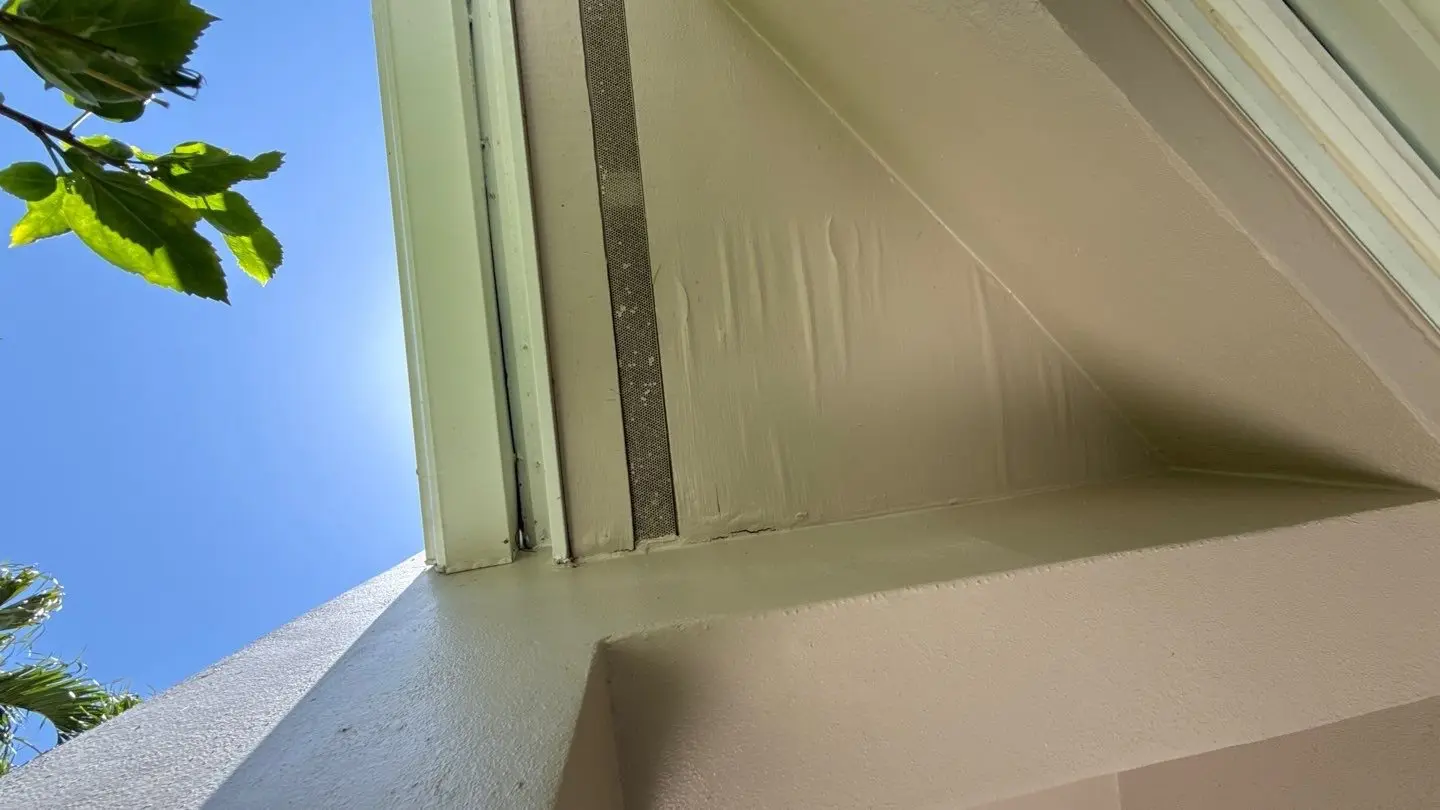
At a recent Palm Beach Gardens repair, the first clue was not a broken tile or an obvious hole in the roof. It was water damage on the soffit below the roof edge.
From the top of the roof, there was no obvious visible defect showing where the water was entering.
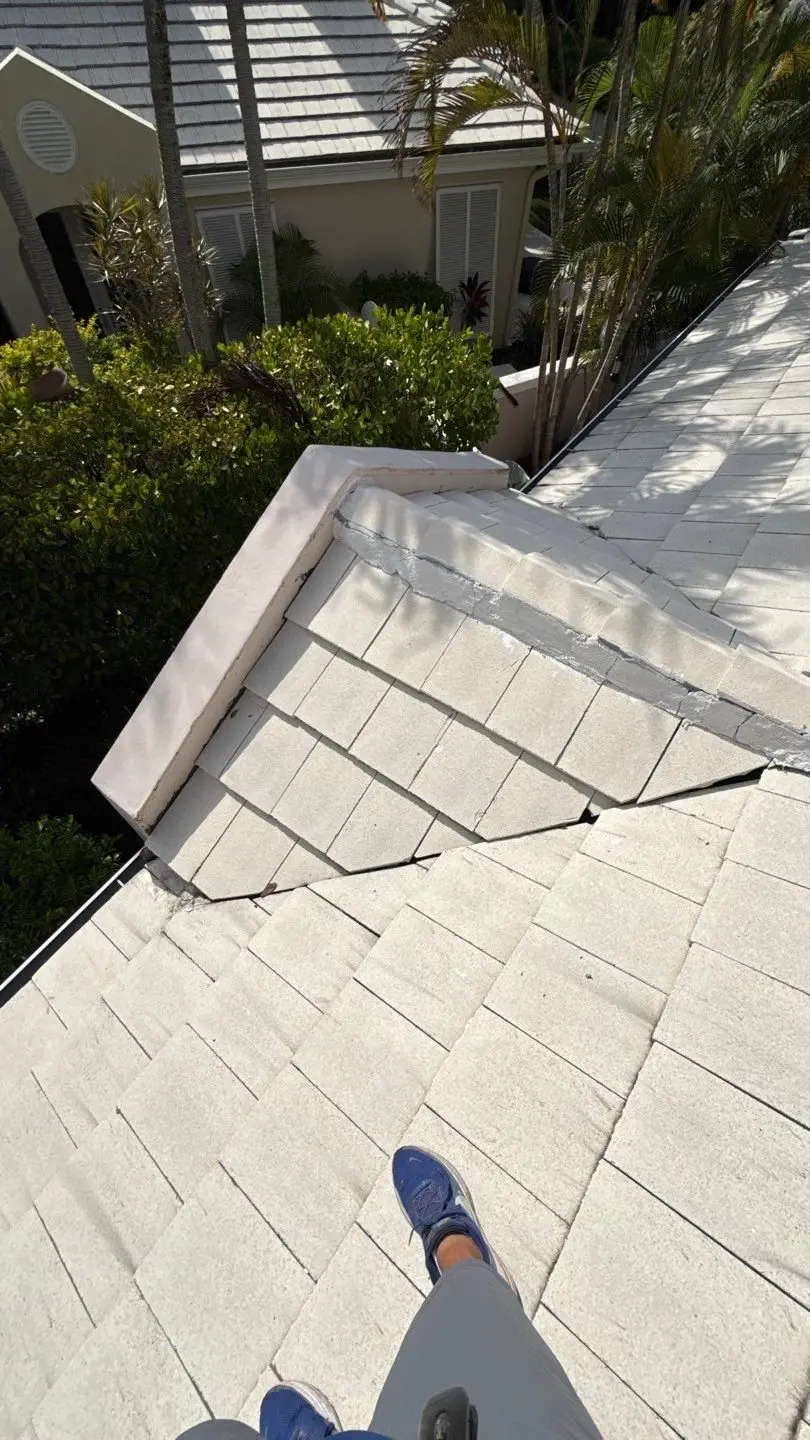
Once we removed the tiles and opened the waterproofing assembly, we found rotten roof decking below it.
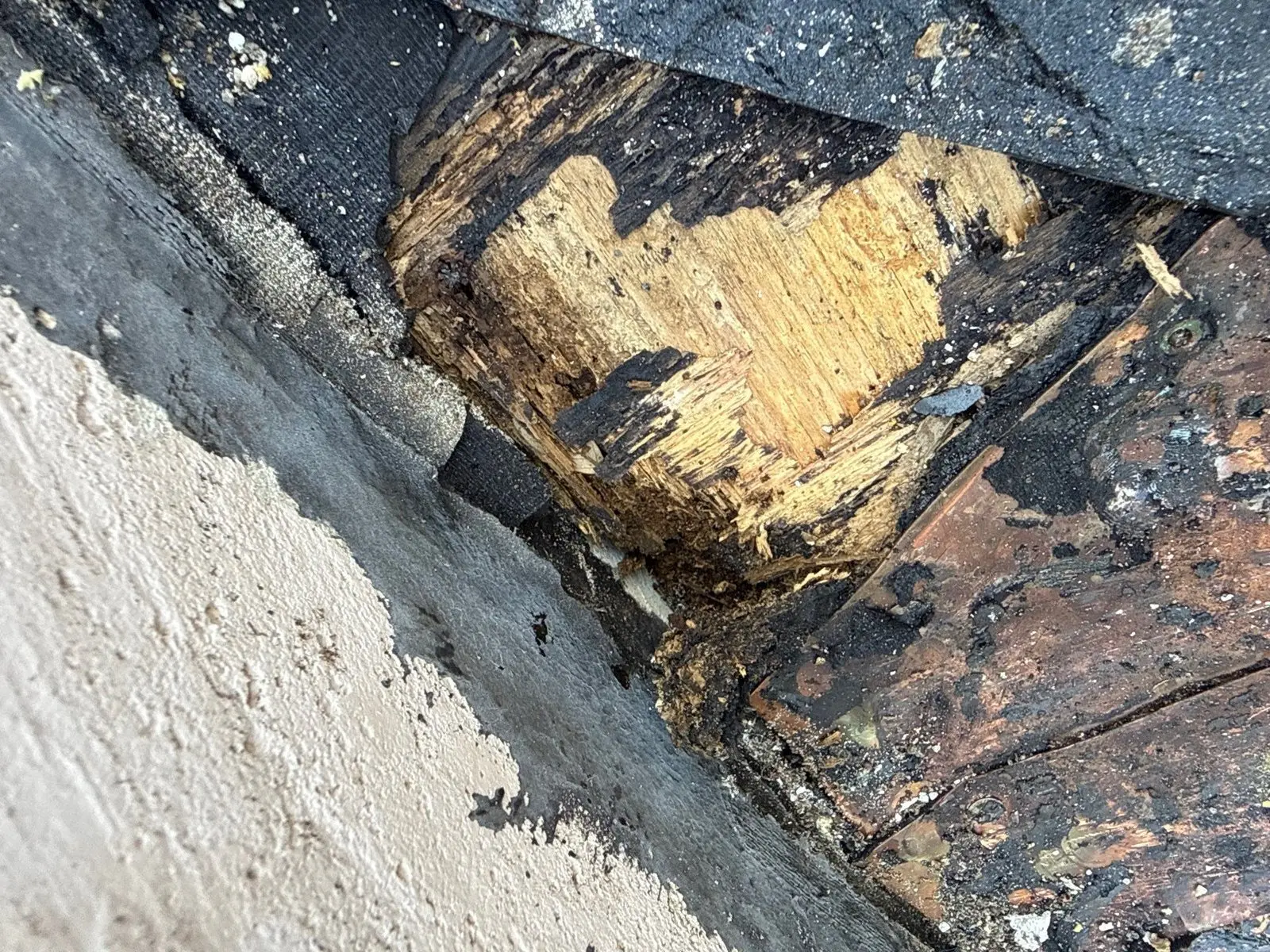
This is why looking only at the tiles cannot conclusively rule out a leak. Exterior staining can give us a place to start, but sometimes the actual water path becomes clear only after the affected area is carefully opened.
What soffit and fascia stains can tell you
I can often narrow down the likely leak area by looking at stains on the fascia or soffit. The stain does not prove the exact source, but it can show where water has been traveling and help guide the roof inspection.
You should call a roofer if you notice staining, even if there is no ceiling stain inside yet. Ideally, of course, I would like you to call Roofs Done Right.
- Staining across several linear feet, numerous water marks down the fascia, or water pouring out during rain deserves prompt attention.
- Soffit that is rotting or showing damage progressively closer to the wall raises the risk of interior damage.
- One newer-looking mark near the outside roof edge may mean the leak has only recently become visible, but water paths are unpredictable and waiting is never risk-free.
A leak over an exterior soffit may remain outside the living area for some time. However, when water from a return or another complication finally reaches the interior, it can enter in significant volume—sometimes almost like a waterfall.
How we repair a leak at a tile-roof return
Most of the tile-roof repairs we perform today involve two-ply waterproofing systems. Although every roof must be evaluated individually, a typical return repair follows this process:
- We carefully remove the existing tiles and set them aside for reuse.
- We remove the affected waterproofing layers down to the wood deck.
- We follow visible water paths on the wood until we locate the actual intrusion area, instead of stopping at the first visible damage.
- We assess the exposed deck and replace rotten or damaged plywood and fascia within our roofing scope as necessary. Roofs Done Right does not perform structural repairs.
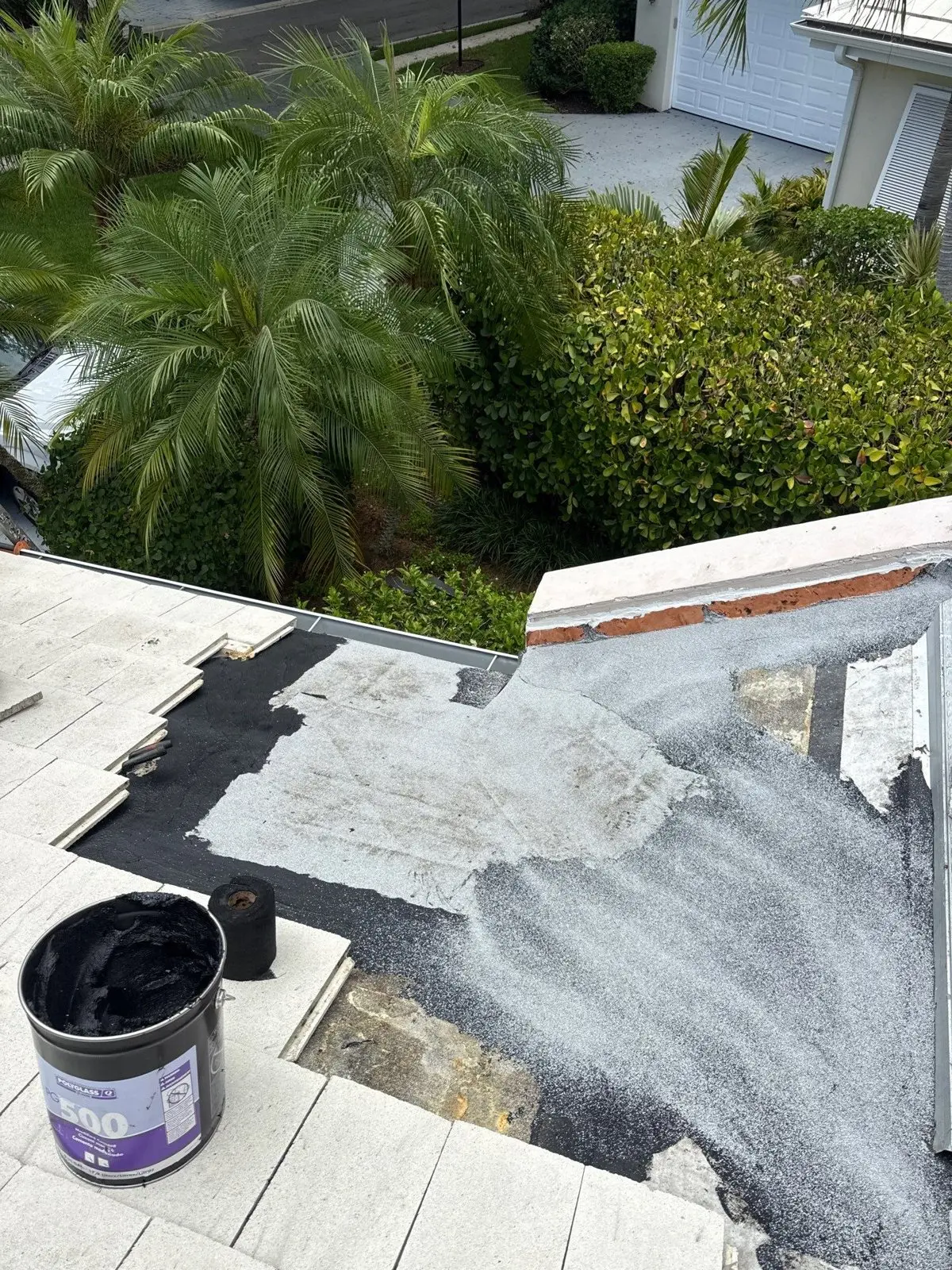
- We install 30-pound asphalt-saturated felt and shingle it into the existing roof system so water sheds properly over the new material.
- Depending on its type and condition, we replace or reset the flashing. Flashing is one of the most important parts of a return repair and is frequently involved in leaks at these complicated areas. Applicable flashing is set in a bed of heavy-bodied roof cement.
- We install self-adhered granulated modified material and connect it to the existing roof with a three-course application: roof cement, reinforcing membrane, and a final coat of roof cement. This means three alternating components—not three layers of each.
- We reinstall the saved tiles with tile adhesive foam. In addition to helping the completed repair blend into the surrounding roof, foam attachment avoids putting new fastener holes through the repaired waterproofing.
Where specifically offered in our written agreement, this type of repair may include a lifetime-of-the-roof warranty on the repaired area. That means the remaining lifetime of the roof—not the lifetime of the homeowner—and the written contract controls the actual coverage, exclusions, and conditions.
Does rotten decking mean the entire roof needs replacement?
Not necessarily.
Finding localized rotten decking at a return, valley, penetration, or another roof complication does not automatically mean the whole roof has failed. If the problem is confined to that detail and the surrounding waterproofing remains serviceable, a localized repair can still be reasonable.
What concerns me more is the overall condition of the underlayment when we handle it. If it is brittle, cracks or breaks apart easily, or begins turning to powder, those are signs that the waterproofing has broadly aged and the roof may be past the point where isolated repairs make sense.
Repeated leaks in the open field of the roof are another warning sign. If leaks keep appearing in the middle of otherwise uncomplicated roof sections—not just at valleys, returns, flashing, or penetrations—that can indicate wider failure of the waterproofing system.
When the rest of the roof remains in suitable condition, a properly completed localized repair can sometimes provide another eight to ten years of useful service. That is an observation from field experience, not a promise for every roof. The actual result depends on the condition and installation of the entire roof system.
Roof condition and insurance requirements are not always the same thing
A roof can still be physically repairable even when an insurance company requires replacement or will not continue the same coverage because of its age. An insurer’s underwriting decision is different from a roofer’s assessment of whether a localized repair is technically reasonable.
Homeowners should consider both issues, but one does not automatically answer the other. We cannot predict or guarantee how a particular carrier will treat a roof.
Do not wait for an interior ceiling stain
If you see staining on the soffit or fascia, have the roof evaluated before water reaches the ceiling inside. The visible tile may look fine while the waterproofing and decking underneath are deteriorating.
The earlier we find the water path, the better the chance that the damage remains localized and repairable.
Call (561) 339-0691Request an Inspection
Roofs Done Right LLC • Florida Certified Roofing Contractor CCC1334197
Related services: tile roof repair, roof repair in Palm Beach County, and roof inspections.
